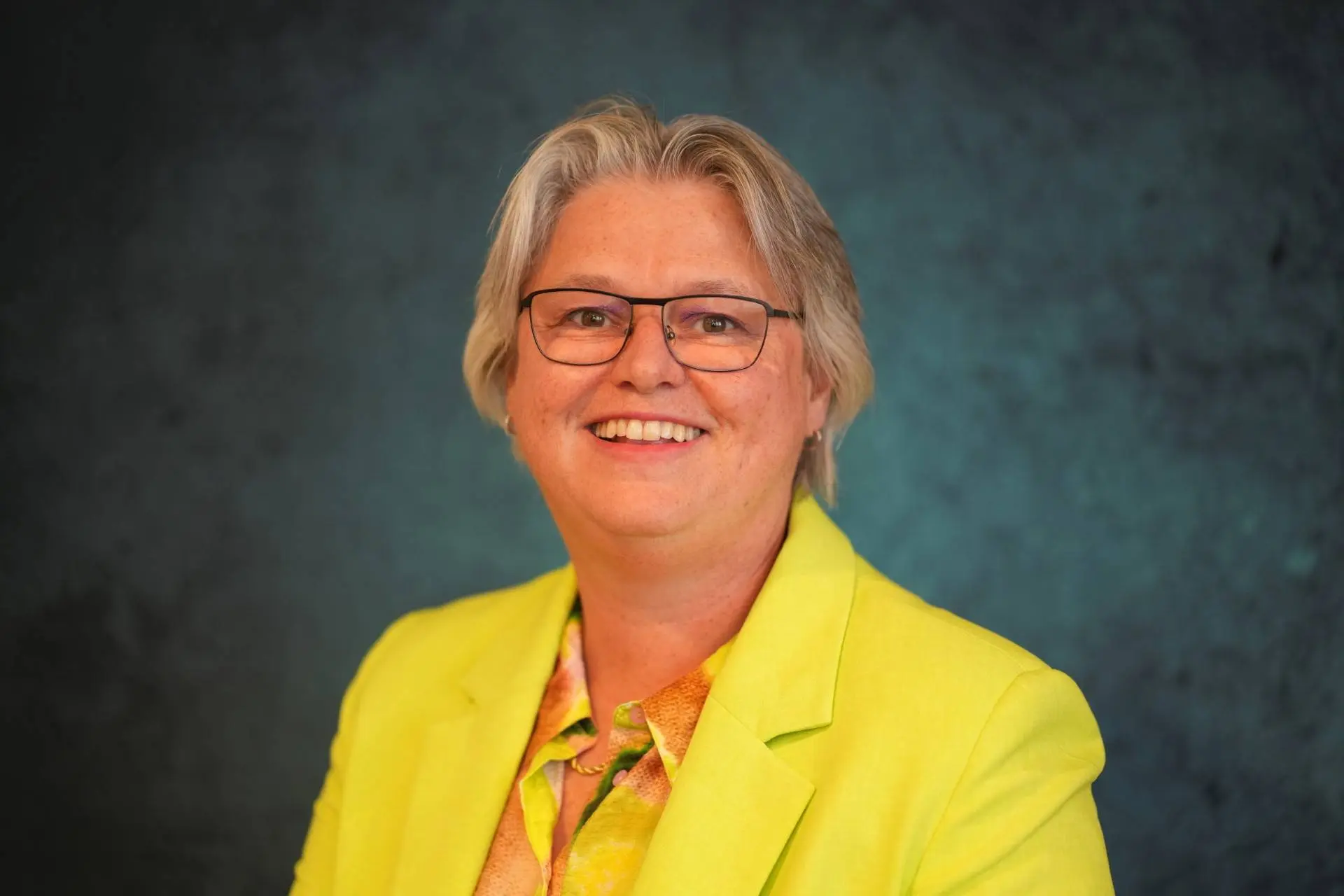
In this
article, Ben Littler speaks to MF Shipping Group CEO Karin Orsel about the
State of the Sector. In a wide-ranging discussion, Karin covers current market
conditions, geopolitical challenges, and inclusivity.
Karin
founded MF Shipping in 1994 – when she was just 23 years old. Back then, the
company consisted of just three people, carrying out crew management of around
60 seafarers across five vessels.
Fast forward to today, and MF Shipping is made up of
an 80-strong office team, and 900 seafarers, managing a fleet of 50 vessels,
including tankers, dry cargo vessels, cement carriers and one RoRo. The growth
is significant, but the core has remained the same: people first and safe,
reliable operations.

MF Shipping manages a fleet of 50 vessels.
How do you
find the short sea market currently?
It varies
across the different sectors we are active in. A common theme is the impact of
geopolitics.
The uncertainty surrounding tariffs, for example, is
an issue – particularly in the tanker markets. We are fortunate, though, in
that we have a lot of long-term agreements in place, which means that this
market remains stable for us, providing peace of mind and continuity.
The dry cargo market is also under pressure. There are
seasonal peaks and troughs in any year.
For these, the market has not been good. It’s not been
as tough as it was between 2008 – 2018 and, again, it makes a big difference if
you have agreements in place. I don’t envy operators working on the spot market
right now – this currently requires a high level of risk acceptance, something
that not everyone can afford.
And then there’s the cement market. This is a very
seasonal market of course. With all that has been happening, with conflicts in
the world, however, there is going to be significant demand, though not in the
regions in which we operate.
Overall, I think 2025 will have been a challenging
year for everyone, with increasing regulation, rising administrative burdens,
ongoing staff shortages, and geopolitical uncertainty – but particularly for
smaller businesses, who feel these pressures most acutely.
In terms of
geopolitical challenges, how is MF Shipping affected?
One area is newbuilds. We currently have some 5000 dwt
vessels under construction in China. We have seen, with the discussions on
tariffs, that operators are looking for alternatives.
The next series of vessels that we are talking about
will run until 2030. When it comes to building in China, is it worth taking a
risk on an investment of that size, over that many years, when there is so much
uncertainty? The question is whether it remains wise to base such long-term
investments on one region, given the current uncertainty.
If we don’t want to be dependent on China, is there
something we can do to maintain some segments in Europe? I understand the price
effect. It’s cheaper to build in China, but that’s not the only factor to
consider. How quickly do you want your vessel to be delivered?
We are also pleased that, for another client, dry
cargo vessels and tankers are being built at shipyards close to our European
offices.

"We are dependent on our European shipbuilding and maritime industries, and we need to preserve them."
I’m currently Chair of the European Shipowners
Association and for us, it’s crystal clear: we are dependent on our European
shipbuilding and maritime industries, and we need to preserve them. This is
essential for innovation, employment, and European strategic autonomy.
Another issue and, for us, the biggest challenge, is
people. We have around 300 Russian seafarers currently. Aside from the obvious
challenges to their movement, and processing wage payments, presently, there is
also an issue with training.
Some of the sanctions packages prohibit knowledge
sharing. What we find is that often, components and equipment suppliers will
not provide training to Russian seafarers.
I understand
this perspective, and the legitimacy of the sanctions. However,
without proper
training, engineers cannot handle critical equipment safely and that creates an
unacceptable safety risk.
At the same time, safe sailing areas can no longer be
taken for granted – regions such as the Red Sea are increasingly considered
high-risk, adding further complexity to crew planning and operations.

MF Shipping employs seafarers of 14 nationalities.
Presumably, given the current challenges in
recruitment, this is only exacerbating a wider issue?
It can be challenging to find and retain people,
certainly. And there is a lot of competition. That’s one of the reasons we are
so focused on providing people with a good working environment. People are
always a focal point at MF Shipping. We believe strongly in putting people, and
their safety and well-being, first.
You recently received the IMO Gender Equality Award
2025. Do you think increased diversity and inclusivity holds the key to solving
this challenge?
I think increased diversity is essential to the
maritime industry, yes. It’s not only about attracting people to fill the
current personnel shortage, it’s also about a shift in skills. So much has
changed, especially with digitalisation. We need people with softer skills than
those traditionally associated with the sector. People skilled in problem
solving, data analysis and communications.
To overcome this challenge, you need to be open to a
wider talent pool. There has been a lot of improvement already. When I started,
30-odd years ago, women were invisible in the industry. Now, there is a growing
number of capable women in senior positions. There is still room for
improvement, of course. Do we need policies in place? Yes, but not only gender
specific ones in my opinion. The goal is equal opportunities for everyone,
regardless of gender or background.
At the MF Shipping Group, we are attempting to address
diversity in a number of ways. We are very open to positioning women in what
have traditionally been seen as male roles, and vice versa, for example.
We also need
to think about the language we use to communicate if we are to attract people
from the current generation.
We are also very open to different nationalities. We
have fourteen nationalities amongst our seafarers, and thirteen nationalities
amongst our office staff.
Fifteen to twenty years ago, I would never have
expected people from South Africa, China, Mexico to be attracted to work at our
company. We must be doing something right.
Popular news
Latest Comments
Loading